

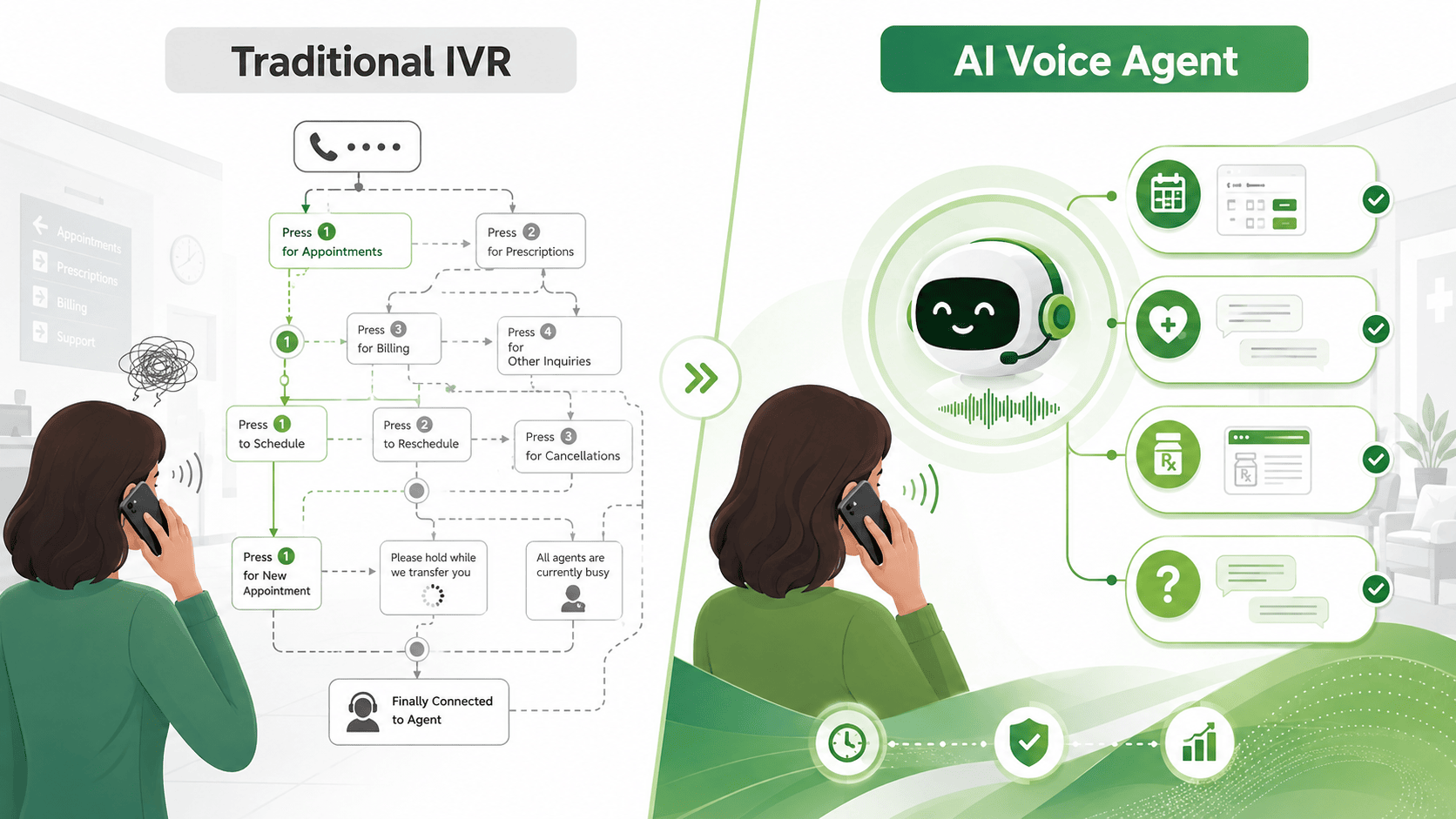
One of the most important patient engagement channels in healthcare remains the telephone. Patients still call healthcare organizations to schedule appointments, request prescription refills, seek care guidance, ask billing questions, and follow up on their treatment plans.
However, managing these interactions is becoming increasingly challenging. Rising call volumes, staffing shortages, long wait times, and growing patient expectations are adding to significant admin workload. Industry discussions around voice AI consistently identify patient access, scheduling, and outreach as areas where traditional call center models are struggling to keep pace with demand.
This is where AI Voice Agents are emerging as a powerful tool for healthcare transformation.

What Is an AI Voice Agent in Healthcare?

An AI Voice Agent in healthcare is an AI-powered conversational system that can understand spoken language, engage in natural conversations, and perform tasks over the phone.
Unlike traditional Interactive Voice Response (IVR) systems that rely on rigid menu trees, AI Voice Agents can understand patient intent, respond conversationally, and execute actions such as scheduling appointments, answering common questions, or initiating follow-up workflows. Industry sources increasingly position AI Voice Agents as a distinct category from both IVR systems and chatbots because of their ability to conduct natural conversations and integrate with healthcare systems.
Rather than replacing healthcare staff, these solutions help automate high-volume, repetitive interactions, enabling teams to focus on more complex patient needs.

Why Traditional Patient Communication Models Are Struggling

Healthcare organizations face a growing gap between patient expectations and available operational capacity.
Patients expect:

  • Immediate responses
  • 24/7 availability
  • Convenient self-service options
  • Personalized interactions
At the same time, healthcare organizations must manage increasing call volumes while balancing staff workloads and operational costs.
As a result, front-desk teams, call centers, and patient access departments often spend a significant portion of their time handling routine inquiries and scheduling-related activities that can be automated. Industry analyses highlight appointment scheduling, reminders, refill requests, and after-hours patient communications among the most common areas for healthcare voice automation.

Key Use Cases for AI Voice Agents in Healthcare

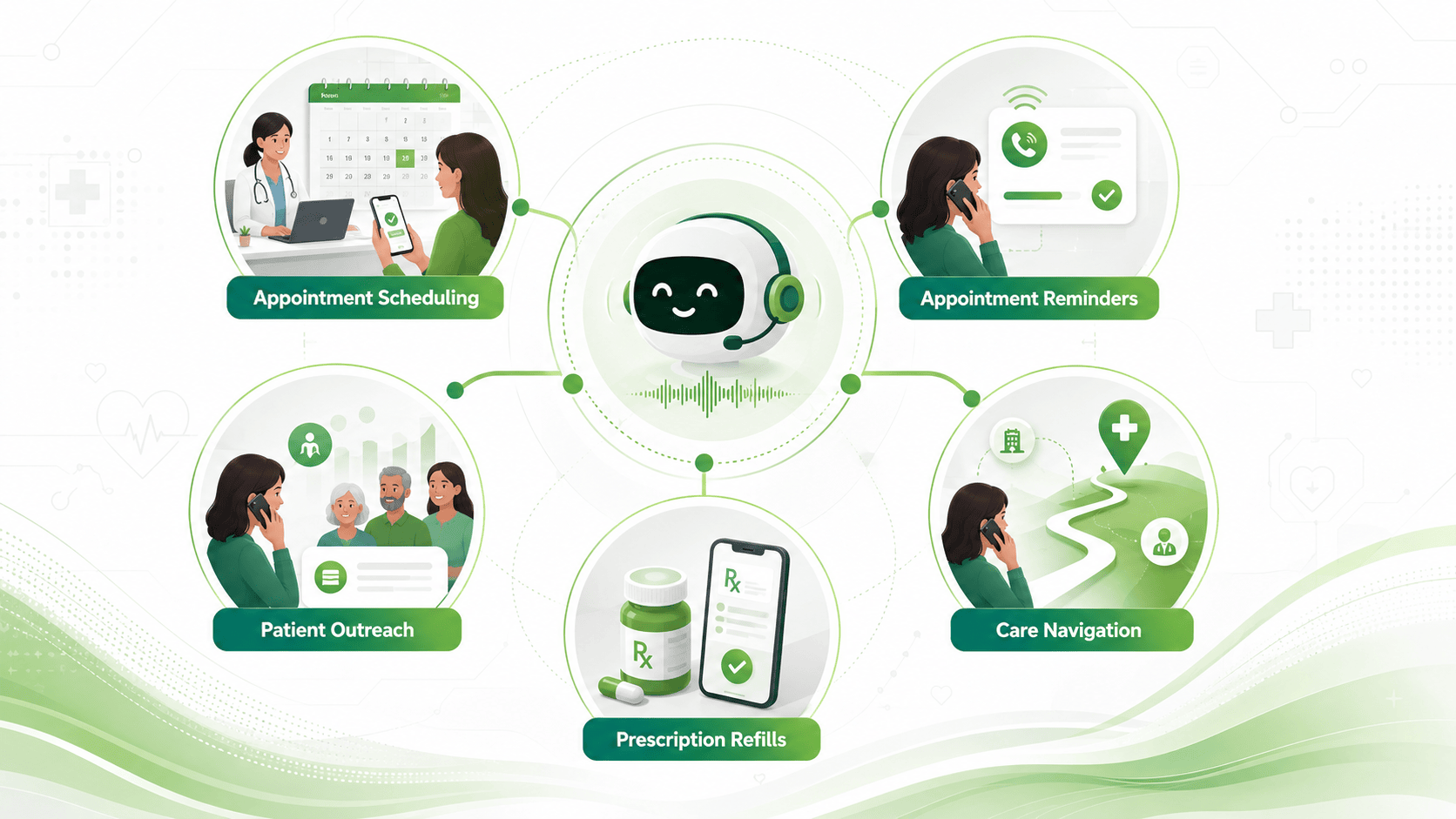
Appointment Scheduling and Rescheduling

AI Voice Agents can help patients find available appointment slots, schedule visits, cancel appointments, and reschedule existing bookings through natural conversations.
By automating these routine interactions, healthcare organizations can improve patient access while reducing administrative burden.

Appointment Reminders and Follow-Ups

No-shows and missed appointments continue to impact operational efficiency and patient outcomes.
AI Voice Agents can proactively contact patients with appointment reminders, confirmations, and follow-up communications, helping organizations improve engagement and adherence.

Patient Outreach Programs

Healthcare organizations often need to conduct large-scale outreach initiatives for preventive care, care gap closure, wellness programs, and post-discharge follow-up.
AI Voice Agents can support these outreach efforts at scale while maintaining consistent communication.

Prescription and Refill Requests

Routine prescription-related inquiries consume valuable staff time.
Voice Agents can collect information, verify details, and facilitate refill request workflows while ensuring appropriate escalation when necessary.

Care Navigation and Patient Support

Patients often need help identifying the appropriate care pathway or obtaining answers to common questions.
AI Voice Agents can guide patients to the right resources, departments, or next steps, improving both accessibility and patient experience.



AI Voice Agents vs. Traditional Communication Technologies

Healthcare organizations have experimented with various communication technologies over the years.
Traditional IVR systems are effective for call routing but can create frustrating patient experiences when interactions fall outside predefined menu structures.

Chatbots provide convenient digital support but primarily serve users who prefer text-based interactions.

Human agents bring empathy and expertise but are constrained by staffing availability, operational hours, and scalability.

AI Voice Agents combine conversational interactions with automation, enabling organizations to support high volumes of patient interactions while remaining available around the clock. Industry discussions increasingly position Voice AI as a complementary layer that helps healthcare teams scale patient communications more effectively.

How HealthAsyst Is Accelerating AI Voice Agent Adoption

At HealthAsyst, we help healthcare organizations and healthcare technology companies accelerate AI adoption through healthcare-focused AI accelerators designed to reduce implementation effort and time-to-value.

Our AI Voice Agent Accelerator combines a proven foundation with the flexibility to configure workflows, integrate with healthcare ecosystems, and align to unique organizational requirements. From appointment scheduling and reminders to patient outreach and care navigation, organizations can accelerate deployment without sacrificing customization.

By combining healthcare domain expertise, interoperability, reusable frameworks, and implementation best practices, HealthAsyst helps organizations operationalize AI Voice Agents more efficiently and scale patient engagement initiatives with confidence.

As healthcare organizations continue their digital transformation journey, AI Voice Agents are poised to become a key component of modern patient access and engagement strategies, helping organizations deliver faster, more personalized, and more scalable patient experiences.


Author

  • Srikanth brings with him over 20 years of experience in the IT industry, with a strong background in SaaS product engineering, AI engineering, and IT services delivery across the HealthTech, EdTech, and FinTech domains. Srikanth has rich experience in leveraging AI and modern technologies to drive innovation, successfully leading large engineering teams, building scalable platforms from scratch, and managing complex multi-client engagements with globally distributed teams.

    View all posts Director - Engineering Services
Close Menu